Lockouts · Hamilton
Lost Keys — Same-Visit Rekey
The lawyer's envelope held two keys for the new house. The previous owners mention a cleaner, a dog walker and a brother who checked on the place, and the builder's paperwork shows six were cut originally.
Lost Keys — Same-Visit Rekey
In plain words
The first useful move after losing a key is to think about where it worked rather than where it went. A house key commonly opens more than the front door: the back door, a side entrance, the door from the garage into the house, a shed, a gate padlock, sometimes a storage room or a mailbox. A same-visit rekey starts by listing those openings, then treats the ones that are yours to change and points you to the right person for the ones that belong to a landlord, a condominium or the postal service. Every cylinder on the list leaves the visit taking a new key.
How the visit goesYou let a part-time employee go on Friday. The shop key is on a ring in their apartment, or their car, or a friend's kitchen, and on Monday morning the register and the stock room open with it.
Hamilton
How the visit goes
How many keys, and who gets them
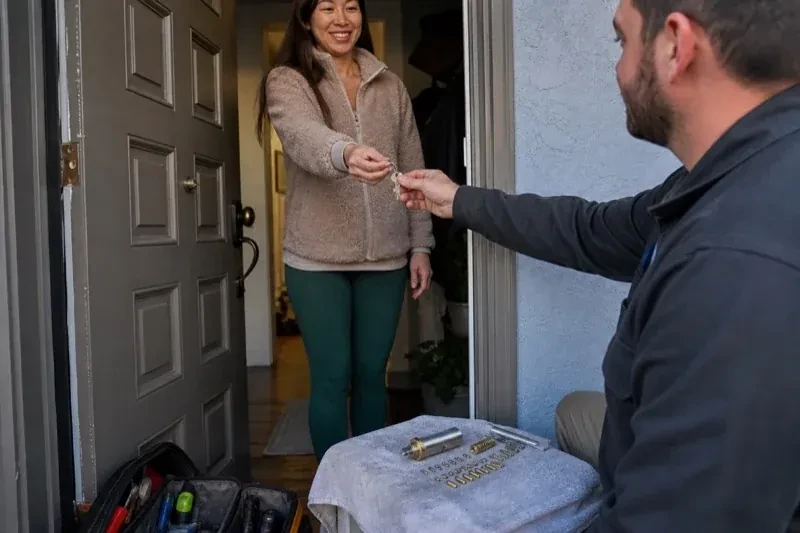
Before pins are touched, the number of keys is agreed, because that number is the whole point of key control. The locksmith asks who in the household or business needs one: each adult, a teenager, a caregiver, the neighbour who feeds the cat, the landlord, the cleaner. Each name gets a key and the total is written down. Anyone who had a copy of the old key but is not on the new list is, from that moment, simply someone without a key. Knowing the count on day one is what makes it possible, years later, to say with confidence exactly how many keys to this property exist.
Setting a new combination pin by pin
On a conventional pin-tumbler cylinder, with it on the bench, the plug is turned slightly and a follower is slid in behind it so the springs and top pins stay in the housing rather than scattering. The plug comes out and the old bottom pins are tipped away. The new key is cut first, then a pin whose length matches each cut is dropped into the corresponding chamber, checked flush with a gauge, and the loaded plug is guided back under the follower. The plug should turn with a light, even feel and no catch. If it drags on one chamber, that pin is sized again before anything goes back on the door.
One key on the ring
If the house was keyed alike during the visit, the ring that goes back in your pocket is lighter. One key opens the front door, the back door, the garage entry and the gate. Each family member carries one thing instead of a jangle, and the question of which key goes to the dog walker has one answer. New doors added later, a shed or a workshop, can be pinned to the same code when they are installed. Guests and sitters find the arrangement easier too, and a single key is a good deal harder to lose than a bunch.
Lost Keys — Same-Visit Rekey
In the van
- Code key machine
- Rekeying pin kit
- Cylinder retaining-clip and cap tools
- Key blanks in common keyways
- Rekeyable-cylinder reset tool
What affects the quote
Same fees day, night or weekend
1Number of keys cut
New keys are cut on site and counted individually. Two for a couple or six for a household with teenagers and a sitter: name the number and the quote reflects it.
2How many cylinders are on the list
A front door with a deadbolt and a handle is two cylinders. Add the back door, the garage entry, a side door and a shed and the count climbs, and the quote follows the number of cylinders repinned.
3Whether the doors can share one key as they are
Cylinders from the same keyway family are pinned alike with no extra parts. A door from a different family needs a compatible cylinder swapped in if you want a single key, and that part is quoted separately.
Lost Keys — Same-Visit Rekey: questions
When is replacing a lock better than rekeying it?
When the hardware itself is the weak point: a plug worn oval, a cylinder eaten by salt from a driveway-facing door, a light knob lock on an exterior door, a keyway with no blanks left in supply, or when you want a different style, a heavier deadbolt or a keypad. In those cases a new lock keyed to match the rest of the house is fitted in the same visit. Everything else is rekeyed.
The ring was stolen with my wallet and licence. What changes?
The priority. A stolen wallet gives the holder your address, and the ring gives them the key to it, so the rekey moves to the front of the queue and the locksmith says so when you call. The work itself is the same: every cylinder the key fitted is repinned and new keys are cut. It helps to list the doors on the phone so the right pin kits and blanks are on the van when it arrives.
I live in a condominium. Which locks are mine to rekey?
Your suite door is generally the one you can act on, and it may sit on a building master system, so the locksmith plans the rekey so the master still operates while the old change key stops working. Lobby doors, the parking gate, amenity rooms and the mailroom belong to the corporation; report a lost fob or key for those to the property manager, who deactivates or reissues it. The locksmith can help sort which is which.
Lockout Services
- Business Lockout ServiceThe heavy glass door has been scraping the threshold for weeks.
- Broken Key ExtractionThe apartment key snapped mid-turn, leaving the cylinder twisted halfway between locked and open.
- Break-In Damage Lock RepairSomeone smashed the little window beside the door, reached in and turned the thumb-turn.
Lost Keys — Same-Visit Rekey near you
Use this list to find the lock service that fits your situation in Hamilton. Openings for lockouts. Rekeys and lock changes for new owners and departing tenants. Deadbolts and high-security hardware for people who want more from their door. Commercial hardware and master keys for businesses. Safes. Keys of every kind.