High security · Hamilton
Safe Installation & Servicing
The accountant's office keeps a decade of client files in cardboard boxes because the only safe in the building is a small drawer safe meant for a laptop, nowhere near large enough for binders of paper.
Safe Installation & Servicing
In plain words
Businesses call for this service for two different reasons that sometimes overlap: protecting cash held overnight, and protecting paper records that would be enormously slow to recreate. The two priorities point toward different construction, since a cash-rated body resists tools while a document-rated interior resists heat and holds its temperature down through a timed fire test. Servicing an existing unit follows the same split: bolt-work and lock mechanics get physical attention, while any fire-rated lining is checked for the trapped moisture that builds up behind an airtight seal.
How the visit goesBehind the filing cabinets sits a heavy floor safe nobody ever bolted down, left exactly as the last owner set it. It opens fine, but a determined pair of hands could simply tip it into a van.
Hamilton
How the visit goes
What the safe actually needs to hold
Before any hardware is chosen, the locksmith asks what will actually sit inside: cash from a till, jewelry, firearms, paper contracts, backup drives, or some mix of all of it. Each of those has a different enemy. Cash and jewelry are mainly at risk from tools and time, so a burglary rating matters most. Paper is mainly at risk from heat, so a fire rating matters most, and digital media needs a much lower internal temperature than paper to survive the same fire. Answering this question first is what keeps the rest of the visit from guessing.
Fitting and setting the lock
A mechanical dial lock is installed and set to a combination chosen privately by the owner, then run through a full sequence of locking and unlocking several times before anyone calls the job finished. An electronic keypad is programmed with a new code, its low-battery warning is tested rather than assumed to work, and any secondary user codes the owner wants are added at the same time. Where a hidden mechanical override sits behind the keypad, its key is handed over separately and its location explained.
A safe that is genuinely fixed in place
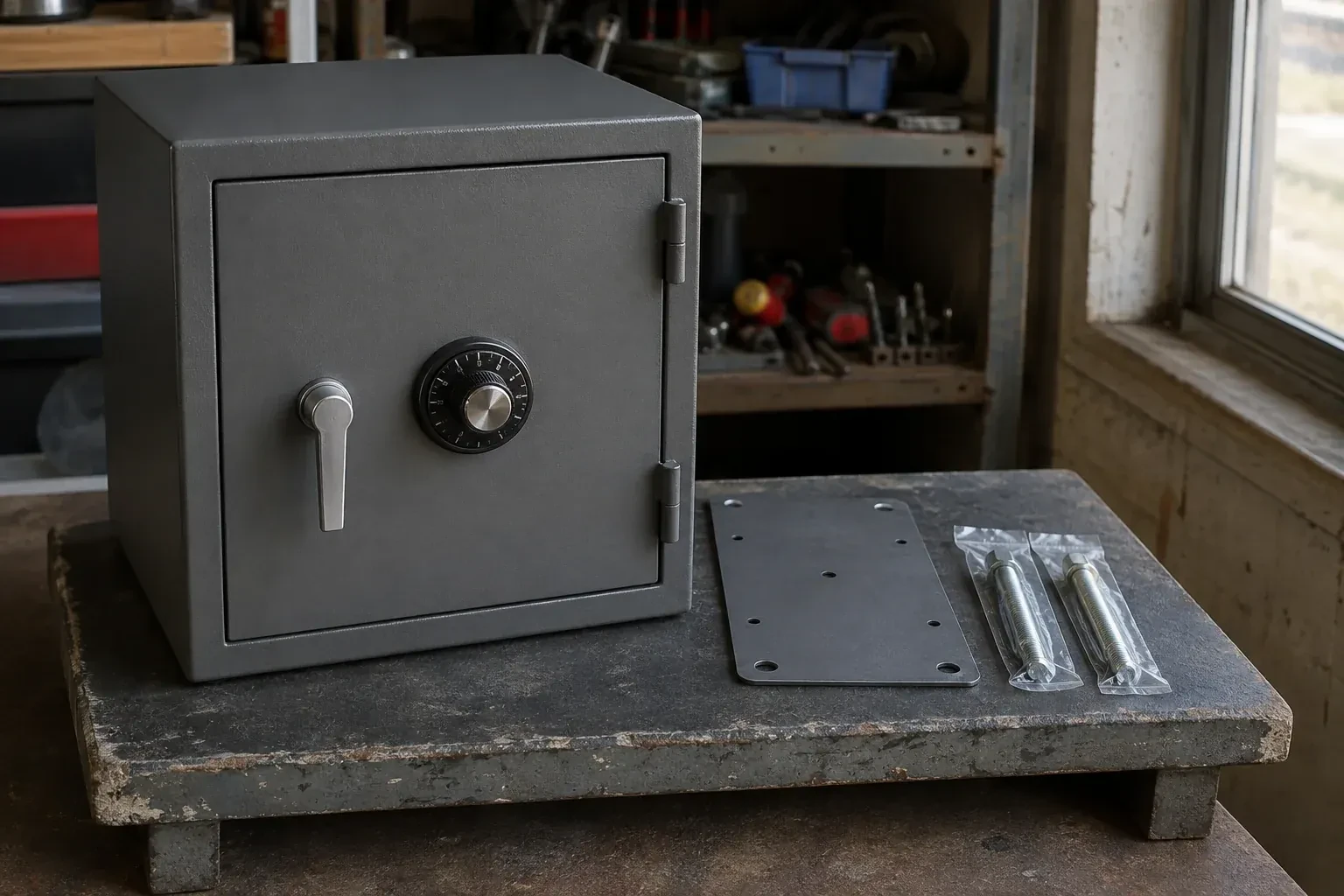
By the end of the visit, the safe sits level, anchored to the floor or wall with hardware matched to that surface, and tested by hand to confirm it does not rock, tip, or shift. Anyone trying to remove it would need to defeat the anchoring itself rather than simply lifting the unit and carrying it elsewhere. The owner is shown exactly where the anchor points are and told what was used, in case a future move or renovation needs to account for them.
Safe Installation & Servicing
In the van
- Torque wrench and socket set
- Concrete anchor bolts
- Mechanical or electronic lock
- Hammer drill and masonry bits
- Bolt-work lubricant
What affects the quote
Same fees day, night or weekend
1Number of safes handled in one visit
A single unit is the simplest visit, while a property with a till safe, a document safe, and a smaller personal safe in another room involves more total work in one call-out.
2Building access restrictions
A property requiring a booked loading dock, a service elevator reservation, or coordination with building management before a heavy delivery can arrive adds scheduling steps beyond the installation work itself.
3Documentation requested
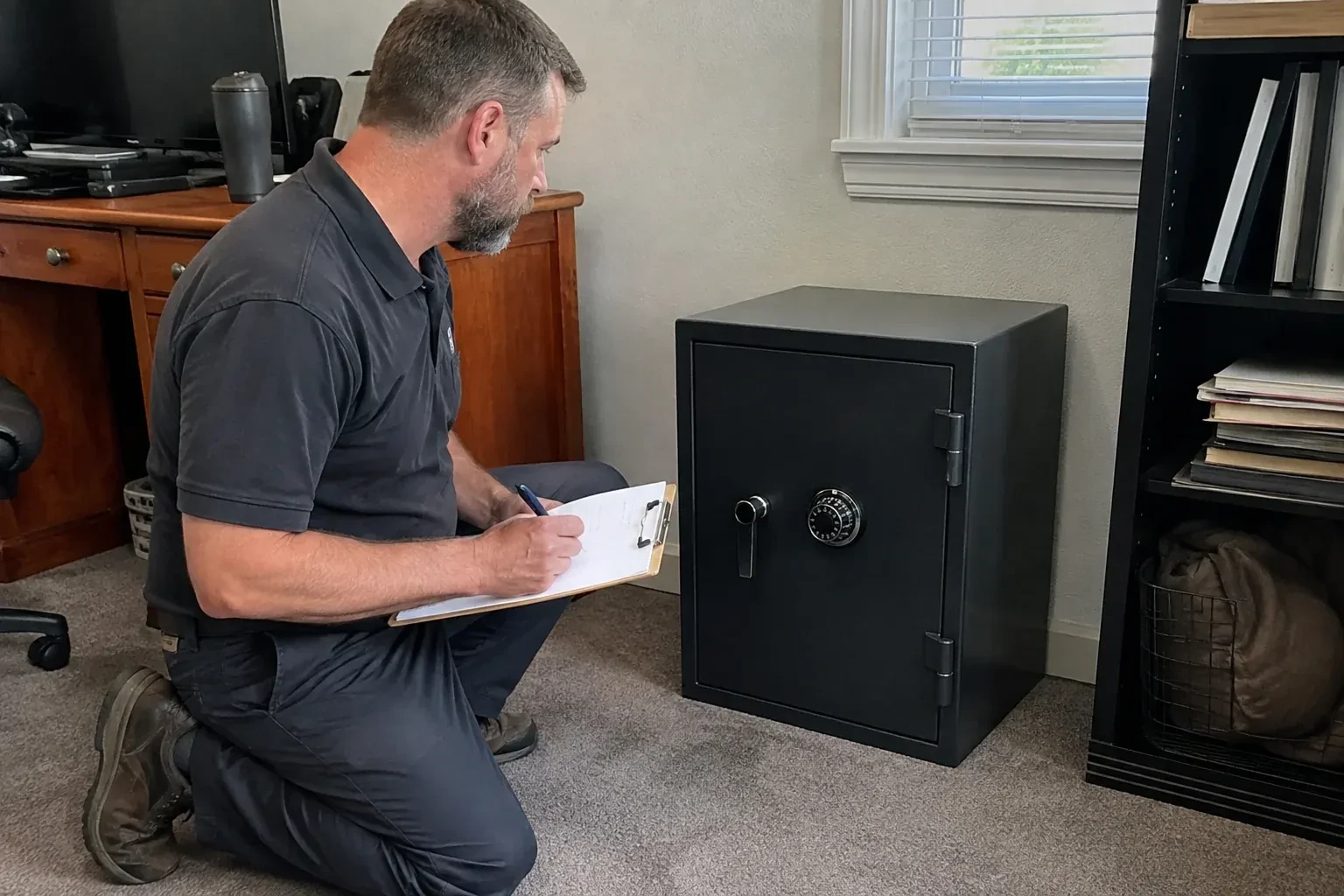
Some customers want photographs of the anchoring, a written note of the model and ratings, or both, usually to satisfy an insurer, and preparing that paperwork adds a little time to the visit.
Safe Installation & Servicing: questions
What is involved in servicing an older safe instead of replacing it?
Servicing works through the same checks as a new installation in reverse: the bolt-work is opened, cleaned, and lubricated, the lock is tested and adjusted if it binds, the anchoring underneath is confirmed or added if it was never done, and batteries are replaced if the lock is electronic. Many older safes have solid steel bodies that outlast the mechanism inside them, which makes servicing a practical route rather than starting over.
Can a safe be concealed inside a closet or behind a panel?
Yes, provided the spot chosen still allows full anchoring and enough clearance for the door to swing open completely. A closet floor, the back of a built-in cabinet, or a recessed wall cavity can all work, though each limits the size of unit that will actually fit and reach the anchor points properly. Balancing concealment against how often the safe gets opened is worth discussing before a spot is chosen.
What is the difference between a mechanical dial lock and an electronic keypad?
A mechanical dial has no battery and is set by hand to a private combination, turning through a sequence to release the bolt; it never runs out of power but takes a little practice to open. An electronic keypad accepts a numeric code and can support several separate codes for different people, but it depends on a battery that eventually needs replacing. Many owners choose based on how many people need access rather than one being simply superior to the other.
High Security Locks
Safe Installation & Servicing near you
Use this list to find the lock service that fits your situation in Hamilton. Openings for lockouts. Rekeys and lock changes for new owners and departing tenants. Deadbolts and high-security hardware for people who want more from their door. Commercial hardware and master keys for businesses. Safes. Keys of every kind.