Lockouts · Hamilton
Broken Key Extraction in Hamilton
The apartment key snapped mid-turn, leaving the cylinder twisted halfway between locked and open. The building manager's spare is somewhere across town and nobody else has a copy.
Broken Key Extraction
In plain words
Keys break for a reason, and finding that reason is half the visit. A brass key wears thinnest at its deepest cut, and after years of turning it fatigues there until a cold morning or a stiff bolt finishes it. Sometimes the lock is the culprit: grit in the keyway, a loose cap, worn pins, or a door that has dropped so the bolt binds and the key takes the strain. The extraction removes the piece; the inspection that follows tells you whether the lock needs a clean and lubricant, an adjustment, or a new cylinder, so it does not happen again next month.
How the visit goesOvernight the deadbolt froze, and this morning the key would only turn partway. One more push and it sheared off flush with the face of the cylinder. There is nothing left to grip, and the cold is not helping.
Hamilton
How the visit goes
What has already been tried
Before choosing a tool the locksmith asks what has gone into the keyway since the break. Tweezers often push a fragment deeper; a screwdriver tip can bend pins; a drop of glue on the other half bonds to nothing useful and leaves a film that has to be dissolved before extractors will slide. A second key jammed on top of the first is a common find. None of this is anything to be embarrassed about; it just changes the plan, and knowing about it in advance means the right solvent, a plug follower or a spare cylinder is in the van before work starts.
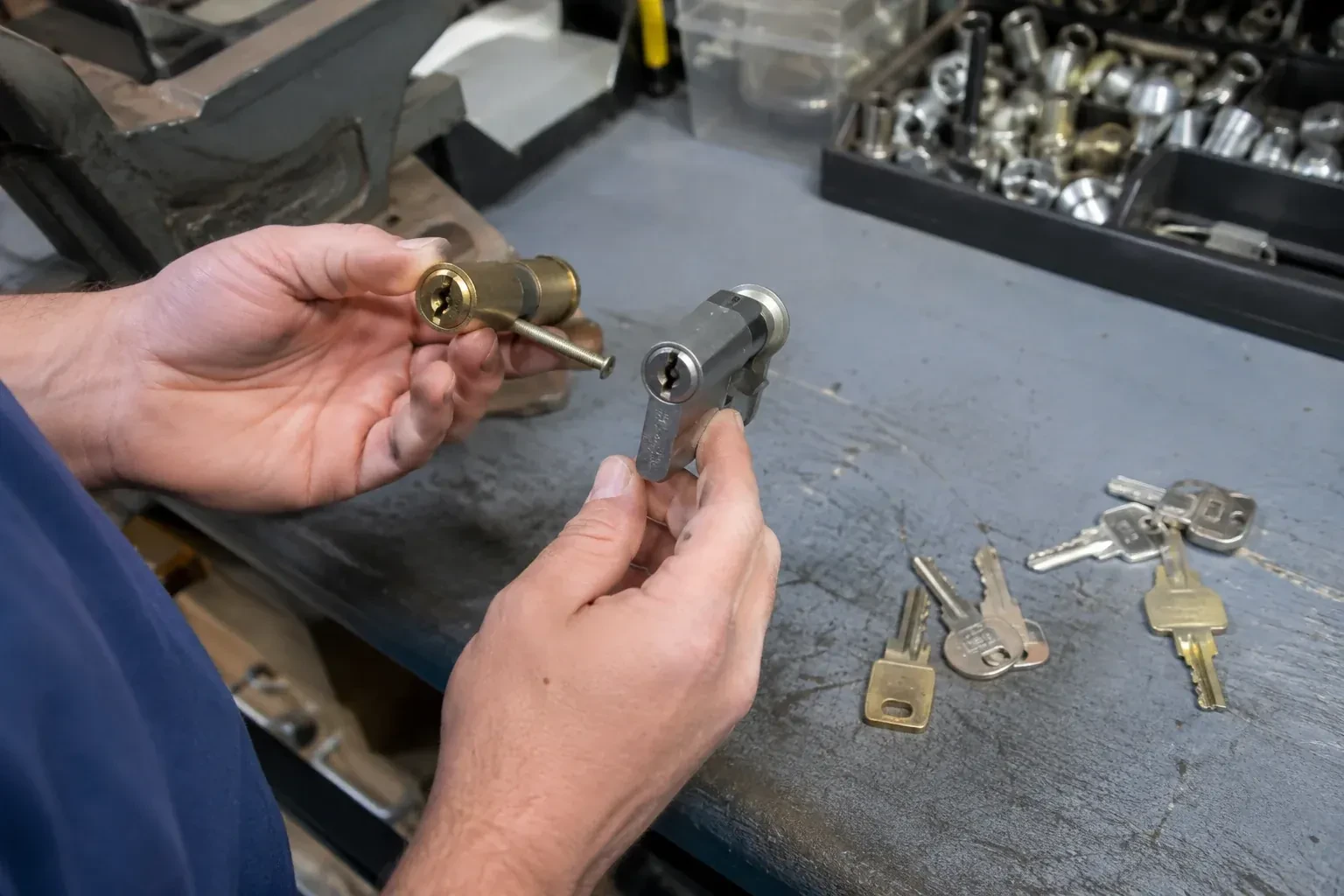
Taking the cylinder apart to free it
Occasionally a piece is too deep, glued in, or wedged past the pins where no extractor can reach. On a serviceable, removable cylinder, the lock is serviced from behind: removed from the door or padlock (a rekeyable padlock is normally unlocked first), its cap or retaining clip taken off, and a plug follower used to push the plug out while the top pins and springs stay in place. With the plug in hand the fragment is tapped out from the rear, the pins inspected, and everything cleaned before reassembly. Where the cylinder is non-rekeyable, damaged or will not free this way, a replacement cylinder is the alternative, explained first.
A cylinder that has been looked after
Extraction usually doubles as a service. The keyway has been blown clear of grit and salt, the pins and springs checked for wear, the cylinder cap snugged if it had loosened, and dressed with the lubricant its maker specifies rather than a one-size-fits-all product, since some cylinders take a dry graphite or PTFE spray and others forbid graphite outright. General household oils and sprays commonly collect dust and clog the pin chambers. A puff of the right lubricant twice a year, spring and fall, keeps the cylinder turning freely, and a key that starts to need force is an early message worth acting on before it breaks.
Broken Key Extraction
In the van
- Plug follower and cap tool
- Manufacturer-approved cylinder lubricant
- Key gauge and decoder
- Compressed air for the keyway
- Replacement cylinder or deadbolt
What affects the quote
Same fees day, night or weekend
1Removing the cylinder to free it
A deep or bound fragment may need the cylinder taken off the door and the plug pushed out from behind on the bench. That disassembly and reassembly is quoted on its own.
2Door or strike adjustment
When the key broke because the bolt was binding in a swollen or sagging door, correcting hinges, strike or weatherstrip is offered and quoted as its own item.
3Drilling and a replacement cylinder
On the rare occasion a cylinder must be sacrificed, the price includes the new cylinder or complete deadbolt plus fitting it, and that is agreed with you before the drill is picked up.
Broken Key Extraction: questions
My key has a chip in it. Does that survive the break?
Usually yes. The transponder chip and the remote electronics live in the plastic head, and the head is the part that stays in your hand when the blade snaps. Once the blade is extracted, a new blade of the right profile is cut and fitted to the old head, so the vehicle continues to recognize the chip without reprogramming. Only a cracked or soaked head needs the electronics moved to a new shell.
Is a broken key a sign the whole lock is worn out?
Sometimes, and the visit answers it. A key that failed from its own fatigue in a clean, smooth cylinder says nothing against the lock. A key that broke because the pins were worn flat, the cap had loosened or the keyway was full of grit says the cylinder needs a service or a rekey. One that broke in a corroded, pitted plug is telling you the lock is due for replacement.
What happens if the piece cannot be removed?
It is rare, and it is discussed before anything changes. A glued, jammed or corroded-in fragment can usually still be reached by taking the cylinder off the door and working the plug out from the back. If even that fails, the cylinder is drilled where plug meets housing, sacrificed and replaced on the spot with new keys cut, so the door locks normally by the time the locksmith leaves.
Lockout Services
- Business Lockout ServiceThe heavy glass door has been scraping the threshold for weeks.
- Break-In Damage Lock RepairSomeone smashed the little window beside the door, reached in and turned the thumb-turn.
- Seized & Jammed Lock OpeningThe key turns a full circle without any resistance and the deadbolt stays exactly where it is.
Broken Key Extraction near you
Use this list to find the lock service that fits your situation in Hamilton. Openings for lockouts. Rekeys and lock changes for new owners and departing tenants. Deadbolts and high-security hardware for people who want more from their door. Commercial hardware and master keys for businesses. Safes. Keys of every kind.