Commercial · Hamilton
Commercial Rekeying in Hamilton
The drawer behind the counter holds a tangle of keys with tape labels: front old, side, Dave. Some open things, some open nothing, and the hardware-store copies mean the true count drifted long ago past anything written down.
Commercial Rekeying
In plain words
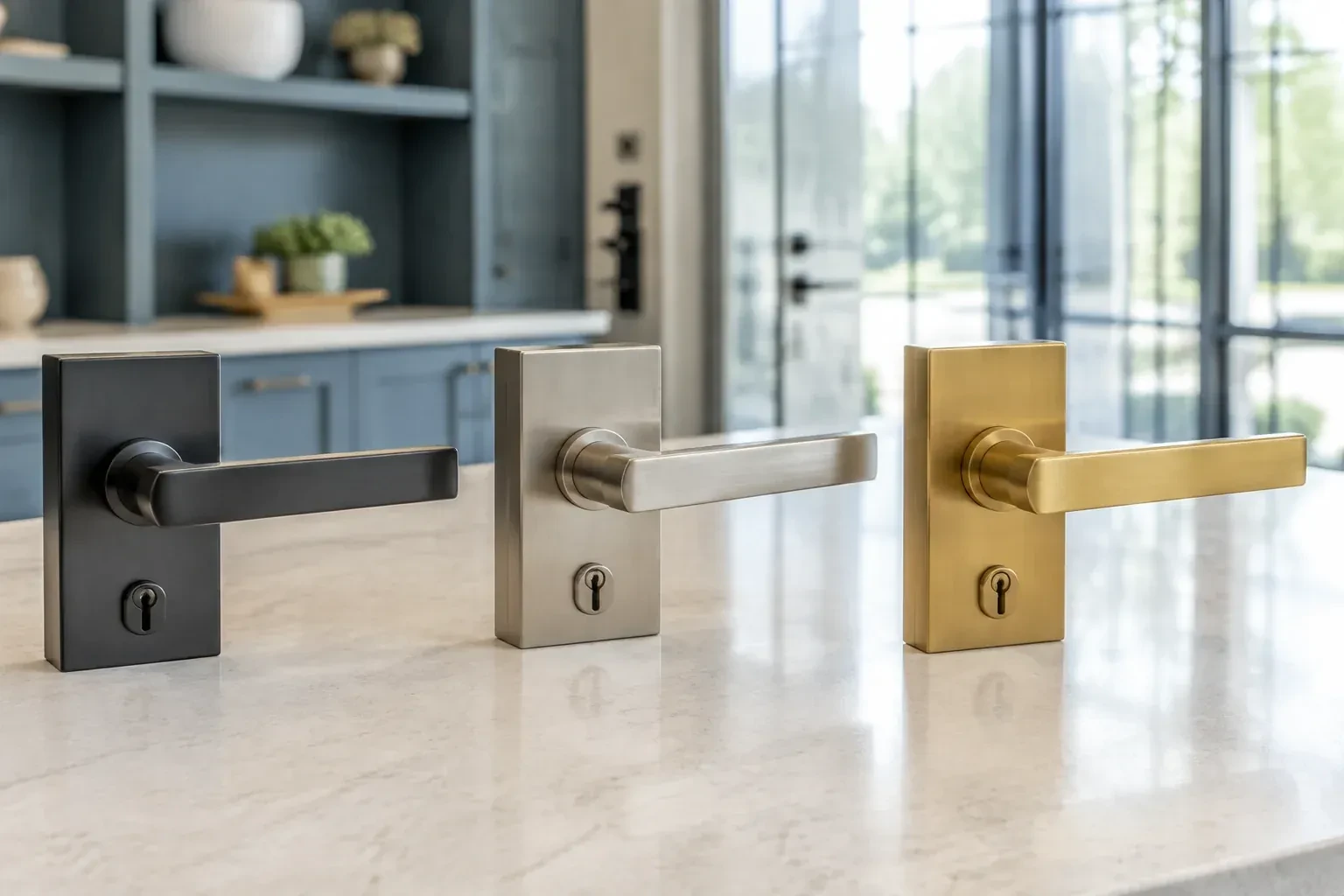
For most business doors, rekeying is the sensible middle path between doing nothing and buying new hardware. Commercial cylinders are built to be repinned many times, and a lever set, mortise lock or storefront cylinder in decent condition has years left in it. Rekeying keeps the finish, the door preparation and the handles you already have and changes only the small brass pins inside. Where a cylinder is worn, corroded by winter salt or too light for the room behind it, the locksmith says so and offers a replacement for that door alone; the rest are rekeyed to the new plan.
How the visit goesTwo people left over the summer and the keys they handed back came up one short. Nobody is sure whether the missing key was for the front door, the stockroom or both, and the sign-out sheet stopped being filled in a year ago.
Hamilton
How the visit goes
Choosing the window and the order of doors
The last part of the assessment is practical: when can the work happen, and in what order. A retail shop may prefer the hour after closing; a restaurant, the mid-morning lull; a warehouse, the gap between the last outbound truck and the night shift. The locksmith also asks about deliveries, the cleaning crew, the alarm monitoring company and anyone else who holds a key and needs a new one before their next visit. From this comes a sequence, typically the doors staff use least first and the main entrance last, so there is always a working, lockable way in and out while the cylinders are being changed.
Cutting and marking the new keys
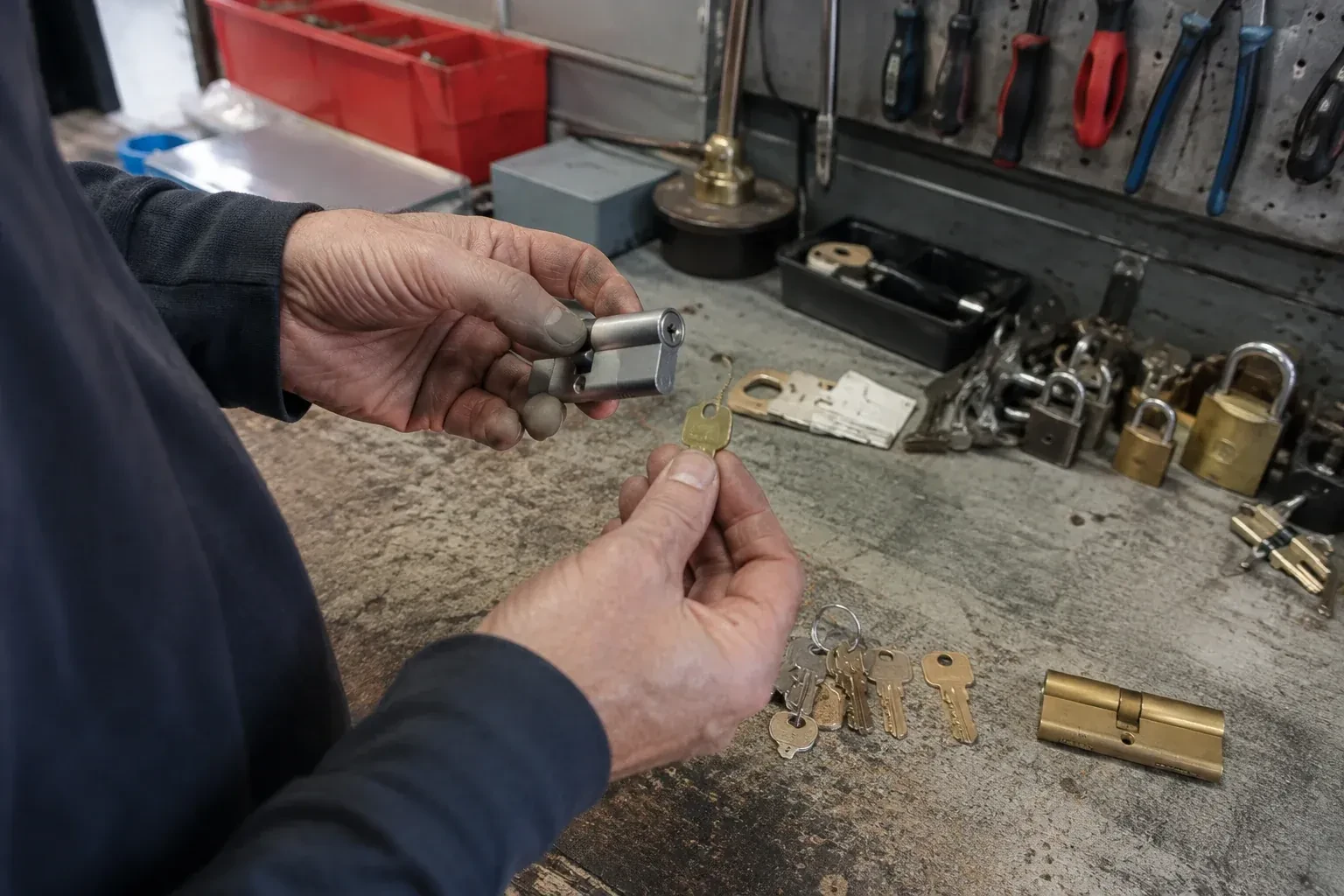
Keys are cut to the new combinations on a code machine rather than traced from another key, so every copy is exact and the tenth key fits as cleanly as the first. Each key is stamped with a short code that means something only on the keying chart; the business name, the address and the word for the door it opens stay off the metal, so a lost key gives nothing away. Keys are counted out by group, tagged, and listed against the names of the people who will carry them. Where the plan uses a restricted keyway, the blanks are drawn against the authorization letter, and that letter is filed with the chart for future orders.
Storefront hardware ready for the salt
Cylinders on a street-facing door live a hard life: slush, salt spray from the sidewalk plough and a dozen freeze-thaw swings a winter. Each cylinder handled during the rekey is cleaned and dressed with the lubricant approved for that model, a dry graphite, PTFE or specified liquid lubricant applied sparingly, since too much graphite can gum a cylinder just as oil traps grit. Keep it that way with a puff of the same lubricant each autumn and a wipe of the key before it goes in on a slushy morning. A set screw snugged, a cam aligned and a bolt that throws fully are part of the handover, so the rekeyed door also locks more cleanly than it did before.
Commercial Rekeying
In the van
- Mortise cylinder set screws and cams
- Standard and restricted key blanks
- Plug follower
- Commercial pin kit
- Key gauge and decoder
What affects the quote
Same fees day, night or weekend
1Cylinders that need replacing
Where a worn, corroded or low-grade cylinder is better replaced than repinned, the new part is added for that door alone, and the locksmith points it out before the work begins.
2Doors out of alignment
A door whose cam, strike or closer needs adjusting so the freshly rekeyed cylinder throws the bolt fully is corrected during the visit, and that adjustment is a separate item.
3Upgrades chosen on the day
Some businesses use the visit to move to interchangeable cores, add a lockbox for the alarm company or fit a heavier cylinder on the cash room. Each is a separate line you can accept or leave.
Commercial Rekeying: questions
Can padlocks, cabinets and the mailbox go on the plan too?
Yes. Gate, cage and shutter padlocks that accept repinning can share the back-door key, and the locks on filing cabinets, drawers and display cases can be grouped so the people who work at them carry a single key while the manager holds a separate one. Mailbox cylinders are small and are usually swapped for new rather than repinned. Everything is entered on the chart, so one document covers the whole premises.
What happens with our fire exit doors and panic bars?
The outside cylinder on an exit door controls entry only, and it can be rekeyed like any other. The inside stays as it must: one push or one turn, no key, no special knowledge, on the exit door itself and on any door on the way to it. A locksmith will not add a keyed device to the inside of an exit, and will point out one if it already exists.
Can the work be done while we are open?
Yes, and many businesses prefer it. The locksmith works one door at a time, finishing and testing each before starting the next, and leaves the main entrance until a quiet moment or until after closing. Doors staff are using are done last and their new keys are handed over first. Where a business would rather nobody sees the work, an early morning or after-hours window is arranged instead.
Commercial Locks
- Access Control InstallationThe team has grown past the point where one shared key still makes sense.
- Panic & Exit HardwareThe new access-control reader at the staff entrance works fine going in, but nobody has sorted out…
- Commercial-Grade Lock ReplacementThe key to the office entrance turns with almost no resistance now, and some mornings the deadbolt…
Commercial Rekeying near you
Use this list to find the lock service that fits your situation in Hamilton. Openings for lockouts. Rekeys and lock changes for new owners and departing tenants. Deadbolts and high-security hardware for people who want more from their door. Commercial hardware and master keys for businesses. Safes. Keys of every kind.